

 español
 English
 français
 Deutsch
 العربية
 中文
中文
Evaluación de la calidad de la energía: la piedra angular de la energía solar estable
Operación del sistema fotovoltaico
A medida que los sistemas solares fotovoltaicos (FV) se generalizan en entornos comerciales e industriales, se ha intensificado el interés en la rentabilidad financiera y las expectativas de rendimiento. Sin embargo, un aspecto crucial, aunque a menudo ignorado, a lo largo de todo el ciclo de vida de los proyectos solares —desde la planificación y la instalación hasta la operación y el mantenimiento— es la evaluación integral de la calidad de la energía (CEL). Ya sea diagnosticando las condiciones de la red antes de la instalación o evaluando los impactos posteriores a la puesta en servicio, las pruebas exhaustivas de CEL ayudan a las partes interesadas a mitigar riesgos, optimizar el rendimiento y garantizar el cumplimiento de las normas del sector y los requisitos de garantía. Basándose en la experiencia de un proyecto fotovoltaico real en Xalapa, México, este artículo profundiza en el valor estratégico y la implementación práctica de la evaluación de la calidad de la energía en sistemas solares.
Conceptos básicos de la calidad de la energía en contextos solares
La calidad de la energía se refiere a la estabilidad y pureza de la energía eléctrica suministrada a los equipos o distribuida a través de una red. Las métricas clave de evaluación incluyen la precisión de la regulación de voltaje, el contenido armónico, el flicker de voltaje y las sobretensiones transitorias. Si bien estos conceptos pueden parecer abstractos, impactan directamente en la seguridad de las operaciones solares: las interacciones entre los inversores fotovoltaicos y la red pueden introducir armónicos o fluctuaciones de voltaje, mientras que las condiciones anormales de la red pueden provocar apagados de los inversores, lo que compromete la producción de energía y potencialmente daña componentes centrales de alto valor. La complejidad de los problemas de calidad de la energía (PQ) en los sistemas solares es particularmente pronunciada. Por un lado, la eficiencia de conversión del inversor y las estrategias de control influyen directamente en la calidad de la energía de salida. Por otro lado, las fallas preexistentes en la red (como el desequilibrio trifásico o el exceso de armónicos de fondo) pueden agravarse con la integración fotovoltaica, amplificando los problemas. Sin una evaluación sistemática de la PQ, identificar la causa raíz de las fallas se vuelve difícil, ya sea que los problemas provengan del propio sistema fotovoltaico, de fallas preexistentes en la red o de su interacción, lo que inevitablemente aumenta los costos de resolución de disputas y el tiempo de inactividad operativa.
Normas obligatorias de calidad de la energía para proyectos solares
La evaluación de PQ está guiada por un marco de estándares industriales autorizados que definen el cumplimiento de las instalaciones solares:
Estándares de la serie IEEE 1547: Ampliamente adoptados a nivel mundial para la interconexión de Recursos Energéticos Distribuidos (RED) con sistemas eléctricos. La enmienda de 2020, IEEE 1547.1-2020, aclara aún más los requisitos de las pruebas de conformidad, exigiendo el uso de medidores de potencia (PQ) de Clase A conformes a la norma IEC 61000-4-30 para medir voltaje, distorsión de corriente y otros parámetros críticos.
Norma IEC 61000-4-30: Especifica los requisitos de rendimiento de los equipos de medición de la calidad de la energía (PQ). Los medidores de clase A, reconocidos por su alta precisión, son el estándar de referencia para las evaluaciones de la PQ en proyectos solares.
Norma IEEE 519: Establece límites de control de armónicos para sistemas eléctricos. Las instalaciones solares deben cumplir estrictamente estos límites para evitar impactos adversos en la red y los equipos adyacentes. Estas normas constituyen la base para el cumplimiento de la calidad de la energía (PQ), y sirven como base técnica para la seguridad de la red y la operación solar confiable.
El Proyecto Xalapa: Perspectivas prácticas de la evaluación PQ
El proyecto fotovoltaico de pérgola en azotea en Xalapa, México, ofrece evidencia contundente de la importancia de la evaluación de la calidad de la energía (PQ). Con una capacidad de 16 kW CA / 16,35 kW CC y dos inversores monofásicos (10 kW y 6 kW), el proyecto se sometió a exhaustivas pruebas conjuntas de rendimiento de PQ y fotovoltaico con equipos profesionales.
- Trazador de curva IV Seaward PV210: Especializado para verificar la consistencia del rendimiento del módulo solar e identificar posibles defectos.
- Dranetz HDPQ Xplorer Plus: un medidor PQ portátil, clase A IEC 61000-4-30 que ofrece recolección de datos de alta precisión.
Hallazgos clave y alertas de riesgo
1. Defectos de rendimiento del módulo fotovoltaico: Las pruebas de curva IV revelaron una anomalía de rendimiento en una de las tres cadenas solares. Dichos defectos, posiblemente causados por suciedad, sombras o fallos de hardware, habrían persistido sin ser detectados sin las pruebas, lo que habría comprometido la producción de energía a largo plazo y habría supuesto riesgos de sobrecalentamiento.
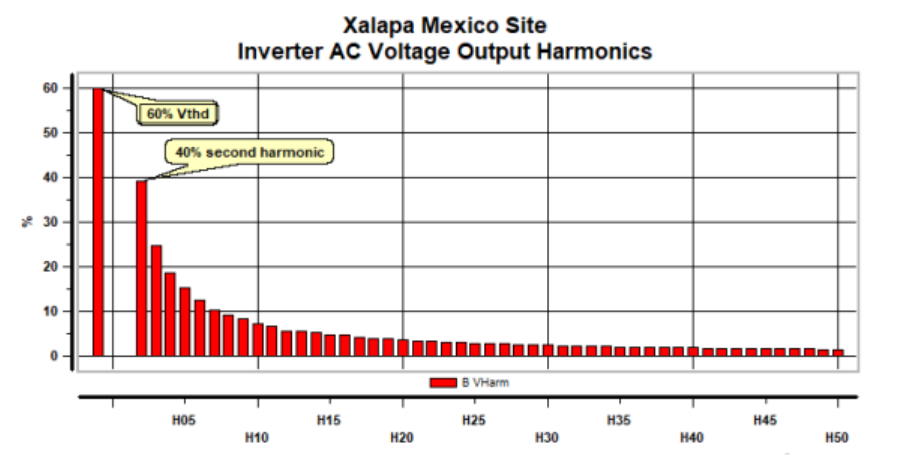
2. Violaciones Armónicas Graves: Las mediciones de PQ indicaron que los armónicos de salida de CA del inversor excedían con creces los límites de la norma IEEE 519, con una Distorsión Armónica Total de Voltaje (Vthd) del 60 %. También se detectaron armónicos de orden par inusuales (poco frecuentes en la mayoría de los sistemas eléctricos). Un exceso de armónicos puede causar sobrecalentamiento en equipos inductivos (p. ej., transformadores), resonancia, corrientes de neutro elevadas, sobretensión y, finalmente, el apagado del sistema, lo que resulta en pérdidas financieras significativas.
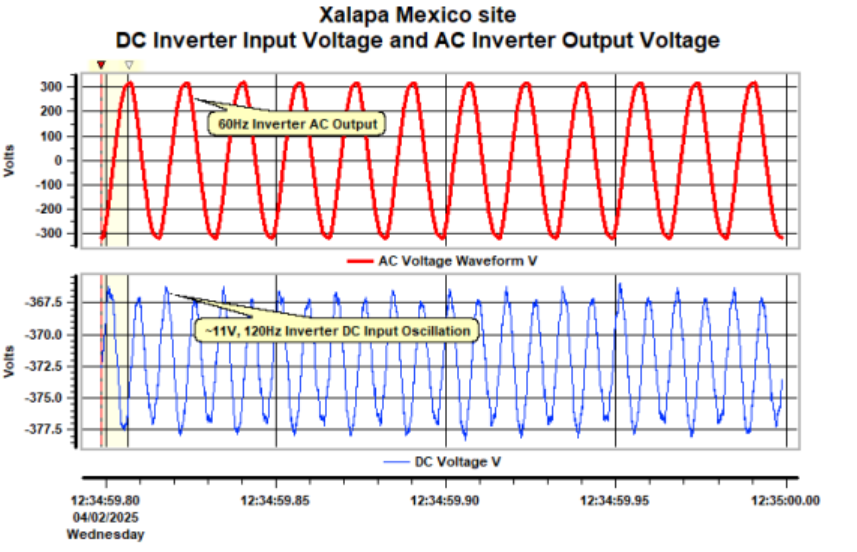
3. Oscilación anormal del lado de CC: La entrada de CC del inversor presentó una oscilación de 11 V a 120 Hz (el doble de la frecuencia fundamental de la red de 60 Hz), probablemente relacionada con armónicos de segundo orden en el lado de CA. Esta oscilación afecta la estabilidad del inversor y acelera la degradación de los componentes. Este caso pone de relieve que los proyectos solares sin evaluación de la calidad de la energía (PQ) presentan riesgos operativos ocultos. Las pruebas profesionales identifican estos problemas de forma temprana, proporcionando una base basada en datos para la toma de medidas correctivas.
Mejores prácticas para asegurar la calidad de la energía en proyectos solares
Con base en la experiencia de la industria y casos reales, los proyectos solares deben implementar un sistema de gestión de PQ de ciclo de vida completo, centrándose en seis prácticas centrales:
1. Realice pruebas de calidad de servicio (PQ) antes y después de la instalación
Las pruebas previas a la instalación establecen una línea base de la red, identificando problemas de calidad de la energía preexistentes y protegiendo a los instaladores de responsabilidades injustificadas. Las pruebas posteriores a la instalación aíslan las perturbaciones de calidad de la energía causadas por la integración fotovoltaica, garantizando así la compatibilidad con la red. Este enfoque de dos fases (evaluación de la línea base previa a la instalación y verificación posterior a la instalación) es fundamental para el cumplimiento normativo y la seguridad.
2. Realizar auditorías anuales de calidad de servicio y salud eléctrica
Las pruebas PQ integrales anuales y las evaluaciones del estado del sistema eléctrico permiten la detección temprana de posibles problemas, aclarar la responsabilidad de las fallas, verificar el cumplimiento del rendimiento y garantizar la confiabilidad a largo plazo.
3. Establecer un análisis correlativo entre el PQ y el rendimiento del sistema
Incorpore métricas de calidad de servicio (PQ) en la monitorización operativa principal. El análisis de las relaciones entre armónicos, fluctuaciones de voltaje, consumo de energía y tasas de fallas de los equipos permite el mantenimiento predictivo, pasando de reparaciones reactivas a prevención proactiva.
4. Integrar los resultados de PQ en los protocolos de aceptación y garantía
Incluir los informes de pruebas de calidad de servicio (PQ) como requisito fundamental para la aceptación del proyecto. Definir criterios relacionados con la PQ en los contratos de garantía para fortalecer la responsabilidad entre proveedores, instaladores y propietarios, garantizando así una trazabilidad eficaz de los problemas. 5. Instalar medidores de PQ fijos para aplicaciones críticas.
Para proyectos a gran escala, entornos de red complejos o sitios con un historial de problemas de calidad de la energía (PQ), se recomiendan medidores fijos de PQ. A pesar de los mayores costos iniciales, proporcionan datos continuos y consistentes sobre eventos de PQ, lo que facilita la toma de decisiones operativas informadas.
6. Documentar sistemáticamente el cumplimiento y la evidencia de la garantía
Mantenga registros técnicos completos, incluyendo datos de pruebas de calidad de producción e informes de cumplimiento. Estos documentos son esenciales para las inspecciones regulatorias y las reclamaciones de garantía, protegiendo así los intereses de todas las partes interesadas del proyecto.



 compatible con la red ipv6