

 español
 English
 français
 Deutsch
 العربية
 中文
中文
Muchas fábricas de soldadura de hierro ahora utilizan energía solar para ahorrar dinero. Sin embargo, la incorporación de sistemas fotovoltaicos (FV) puede generar nuevos problemas eléctricos. Una planta enfrentó multas mensuales cuantiosas debido a la disminución de su factor de potencia. Este artículo explica cómo solucionamos este problema con tecnología avanzada.
El desafío del bajo factor de potencia
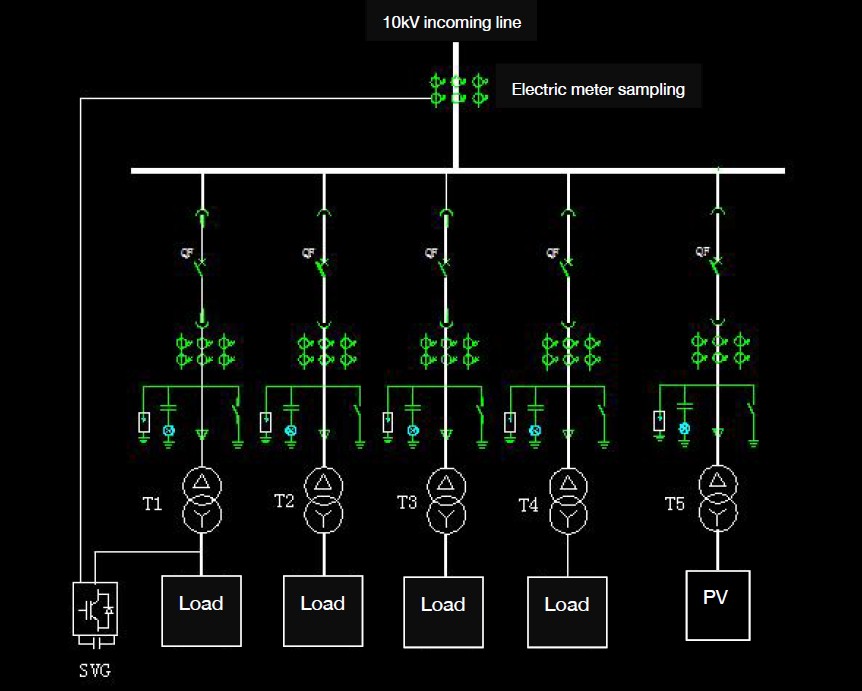
El sitio cuenta con cinco transformadores principales. Los transformadores T1 a T4 alimentan las cargas de la fábrica. El transformador T5 se utiliza para la generación de energía fotovoltaica. El año pasado, el sitio pagó $4,100 en multas. Tras añadir más equipos fotovoltaicos, las multas aumentaron. Las multas mensuales recientes oscilaron entre $2,800 y $4,100.
La fábrica utiliza armarios de condensadores para la potencia reactiva. Estos armarios funcionan bien con cargas estándar. Sin embargo, los sistemas fotovoltaicos cambian la forma en que la red ve la energía. La mayor parte de la demanda de la fábrica ahora se satisface con energía solar. Esto reduce la potencia activa extraída de la red.
El medidor de la compañía eléctrica solo registra la potencia activa directa. No registra bien la potencia inversa. Esto hace que el factor de potencia medido parezca mucho menor de lo que realmente es. Además, los bancos de condensadores antiguos reaccionan con demasiada lentitud a los cambios solares.
Análisis de datos de pruebas del sitio
Probamos el lado de baja tensión de los cinco transformadores. Durante nuestra visita al sitio, detectamos varios problemas. A continuación se muestran los datos de nuestras pruebas iniciales.
|
Transformador |
Capacidad (kVA) |
Potencia reactiva (kvar) |
Factor de potencia |
|
T1 (Fábrica) |
2500 |
60 |
0.946 |
|
T2 (Fábrica) |
1250 |
40 |
0.90 |
|
T3 (Fábrica) |
800 |
50 |
0,93 |
|
T5 (Sitio fotovoltaico) |
N / A |
20 |
1.00 |
Nuestras pruebas mostraron una alta distorsión de corriente armónica. Los armónicos 5.º y 7.º superaron los límites de seguridad. Esto se debió a que los gabinetes de condensadores causaron resonancia. La resonancia puede dañar el equipo y generar calor.
La solución SVG recomendada
Para corregir las penalizaciones, el sitio necesitaba un control preciso. Recomendamos un generador de variables estáticas (SVG). 12 Un SVG utiliza tecnología IGBT moderna. Genera corriente para cancelar la potencia reactiva al instante.
La necesidad actual de potencia reactiva es de unos 200 kvar. Sugerimos una SVG de 400 kvar para el transformador T1. Esto permite el crecimiento futuro del parque.
El SVG Toma datos de muestreo del lado de alta tensión. Luego, compensa el lado de baja tensión en tiempo real. 16 Este método es mucho más rápido que utilizar condensadores antiguos.
Características y rendimiento de SVG
El SVG ofrece numerosas ventajas para las plantas industriales. Responde en menos de 5 milisegundos. Admite potencia tanto inductiva como capacitiva.
|
Característica |
Especificación de rendimiento |
|
Tiempo de respuesta |
≤ 5 ms |
|
Eficiencia |
> 97,5% |
|
Rango de filtrado |
Armónicos del 2º al 50º |
|
Protección |
Sobretensión y sobrecalentamiento |
El SVG es muy eficiente y preciso. Mantiene el factor de potencia por encima de 0,99. Además, filtra los armónicos dañinos que encontramos.
Resultados de compensación en el mundo real
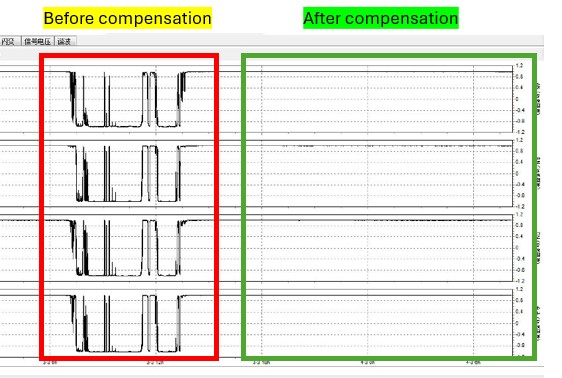
Probamos el sitio durante tres días después de la instalación. Los resultados fueron excelentes. El factor de potencia se mantuvo cerca de 1.00.
La potencia reactiva se redujo de 200 kVAR a 20 kVAR. El sitio ya no paga costosas multas. El sistema eléctrico ahora es estable y seguro.
Usar un SVG es la mejor manera de gestionar las instalaciones de energía solar. Protege sus equipos de la resonancia. Además, le garantiza no volver a pagar multas por factor de potencia.



 compatible con la red ipv6