

 español
 English
 français
 Deutsch
 العربية
 中文
中文
Los armónicos son corrientes y tensiones adicionales, múltiplos enteros de la frecuencia de alimentación, que las cargas no lineales consumen además de la onda sinusoidal fundamental. Su efecto es costoso: los transformadores, los motores y los conductores neutros se sobrecalientan, los relés se disparan incorrectamente y la vida útil de los equipos se acorta incluso por debajo de la carga nominal.
Esta guía abarca la medición en el punto de acoplamiento común (PCC) y cómo comparar las principales tecnologías de mitigación.
Una corriente armónica no realiza trabajo útil: no añade par motor ni proporciona potencia real, solo calor. La temperatura del bobinado, provocada por las pérdidas I²R, es la principal causa del envejecimiento y el fallo del aislamiento.
Tres efectos hacen que los armónicos sean más dañinos que la corriente fundamental:
Los relés y disyuntores responden a la potencia eficaz (RMS) o de pico, no a la potencia útil (kW), por lo que la distorsión provoca disparos intempestivos. Los bancos de condensadores también se ven afectados: su impedancia disminuye a medida que aumenta la frecuencia y puede resonar con la inductancia del sistema, amplificando la señal en un orden de magnitud.
La frecuencia fundamental es la componente de 50 o 60 Hz que proporciona potencia real. Una corriente armónica se sitúa en un múltiplo entero de esa frecuencia: a 50 Hz, el quinto armónico es de 250 Hz y el séptimo, de 350 Hz.
La distorsión armónica total (THD) es el valor RMS de todos los componentes armónicos expresado como porcentaje de la fundamental. THDi describe la distorsión de corriente; THDv describe la distorsión de voltaje, que depende de la impedancia de la fuente. Un único valor de THDi puede ocultar el problema: un filtro que elimina los armónicos de quinta y séptima orden puede dejar intactos los de undécima y decimotercera orden. Por lo tanto, las normas IEEE 519 e IEC 61000 limitan tanto los órdenes individuales como el total en el punto de acoplamiento común (PCC).
La corriente armónica aumenta la corriente RMS, por lo que cada amperio adicional produce calor I²R. También distorsiona el factor de potencia: el factor de potencia de desplazamiento (cos φ) es el desfase entre la tensión y la corriente fundamentales, mientras que el factor de potencia real es la relación entre la potencia real y la aparente (P/S). A medida que aumenta la distorsión, el factor de potencia real disminuye incluso cuando cos φ parece aceptable, por lo que se evalúan conjuntamente la compensación de potencia reactiva (un SVG) y la mitigación de armónicos (un AHF).
Las pérdidas armónicas elevan la temperatura de transformadores y motores por encima de su temperatura de diseño, lo que requiere una reducción de potencia y acelera el envejecimiento de su aislamiento. En la distribución de cuatro hilos, los armónicos triples sobrecargan el neutro. Los relés, interruptores y variadores también se disparan sin una sobrecarga real, y los condensadores de corrección del factor de potencia existentes pueden entrar en resonancia con la red eléctrica, lo que representa un riesgo de incendio reconocido. La Tabla 1 resume las principales fuentes y las tecnologías utilizadas para controlarlas.
| Fuente armónica | Pedidos típicos | Impacto en el sistema primario | Tecnología de mitigación típica |
|---|---|---|---|
| Variador de frecuencia/rectificador de 6 pulsos | 5.º, 7.º, 11.º, 13.º | Calentamiento del transformador y del motor; THDi por encima de los límites | Filtro armónico activo (AHF); reactor de línea o actualización de 12 pulsos. |
| rectificador de 12 pulsos | 11, 13, 23, 25 | Distorsión menor pero residual | Trampa pasiva o AHF |
| Fuentes de alimentación monofásicas (PC, servidores, controladores LED) | 3.º, 5.º, 7.º | Sobrecarga neutra y de secuencia cero | AHF con capacidad de secuencia cero; neutro de potencia reducida |
| Sistemas UPS | 5.º, 7.º, 11.º | THDi de entrada; distorsión de voltaje en el PCC | AHF o frontal activo |
| Hornos de arco / soldadoras | Banda ancha del 2.º al 13.º grado más parpadeo | Distorsión de voltaje y parpadeo | SVG combinado con AHF; filtros pasivos |
| Inversores fotovoltaicos / Cargadores para vehículos eléctricos | 5.º, 7.º más interarmónicos | Distorsión de voltaje y resonancia | AHF y SVG |
Coloque los transformadores de corriente (TC) donde sea necesario demostrar la responsabilidad de la distorsión, normalmente en el punto de acoplamiento común (PCC) o en el bus que alimenta las cargas no lineales. En el caso de un filtro activo, los TC deben medir la corriente total de carga que el filtro corregirá; si los TC se encuentran en la rama incorrecta, el filtro corregirá la señal errónea.
Registre THDi y THDv, los órdenes armónicos individuales (al menos el 3.º, 5.º, 7.º, 11.º y 13.º), la corriente neutra, el factor de potencia real y la potencia reactiva a lo largo de un ciclo de trabajo completo. Si THDi está aumentando, consulte nuestro artículo sobre¿Qué causa un THDi elevado y cómo reducirlo?Sigue los mismos pasos de diagnóstico.
| Solicitud | Qué medir (y dónde) | Medidas de mitigación recomendadas | Parámetro de selección de clave |
|---|---|---|---|
| Planta de motores pesados con variador de frecuencia | THDi y órdenes 5.ª/7.ª en el PCC; ciclo de trabajo | Filtro armónico activo (AHF) | Corriente nominal del filtro (A) y ubicación del transformador de corriente en el bus de carga. |
| Centro de datos / SAI | THDi de entrada, THDv del bus, corriente neutra | AHF más SVG | Capacidad de secuencia neutra y cero; frecuencia de conmutación |
| Oficinas, iluminación e informática (monofásica) | Triplen (3.º/9.º) y corriente neutra | AHF o neutral de potencia reducida | Manejo de corriente de secuencia cero |
| Planta con bancos de condensadores existentes | Escaneo de impedancia y resonancia | Filtro pasivo desafinado o SVG | Orden de afinación y evitación de resonancias |
| Planta fotovoltaica / Centro de recarga de vehículos eléctricos | Distorsión armónica total (THDv), parpadeo e interarmónicos en el PCC. | SVG con AHF | Tiempo de respuesta y rango dinámico |
Cada tecnología resuelve una parte diferente del problema:
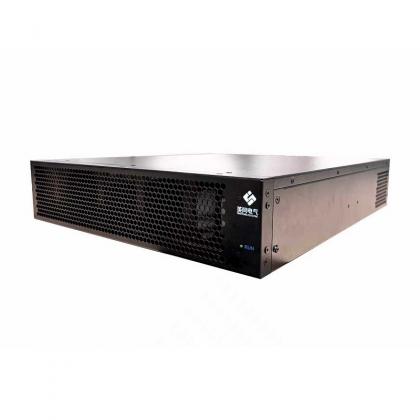
Tamaño determinado por medición, no por la potencia del transformador:
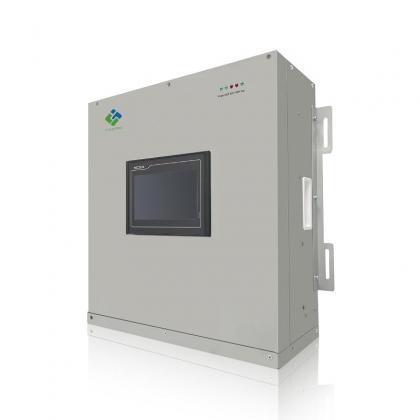
Los filtros son eficaces, pero no universales, y una especificación honesta implica conocer sus límites:
Registre THDi, THDv, los órdenes 5.º, 7.º, 11.º y 13.º, la corriente neutra y el factor de potencia real en el PCC y en el bus de carga durante un ciclo de trabajo completo. Este perfil, y no la potencia nominal, establece la base para el dimensionamiento.
Elija un AHF para la corriente armónica de variadores de frecuencia, sistemas UPS o cargas variables; un SVG para la potencia reactiva o la estabilidad de voltaje; un filtro pasivo solo cuando el espectro de carga sea estable y se haya comprobado la resonancia. Muchas plantas necesitan ambos.
La instalación normalmente consiste en una conexión en paralelo en el bus que se va a corregir, con transformadores de corriente (TC) conectados a la corriente de carga medida. Los elementos principales son un interruptor, cable, refrigeración de la carcasa y polaridad correcta de los TC; la puesta en servicio confirma la desconexión en THDi y cada orden previsto.
Los filtros activos no tienen partes móviles y solo requieren revisiones periódicas de los ventiladores, las conexiones y el firmware. Su justificación rara vez se basa en una cifra de retorno de la inversión prometida; se trata del ahorro en costes derivados de fallos, disparos, tiempos de inactividad y penalizaciones de las compañías eléctricas, verificado frente a la reducción medida del consumo energético total (THDi) y las pérdidas.
Los armónicos representan un costo oculto pero cuantificable. Una vez cuantificada la distorsión en el punto de conexión común (PCC), la combinación adecuada de filtros armónicos activos, generadores estáticos de potencia reactiva (var) y componentes pasivos puede reducir las pérdidas, evitar disparos intempestivos y prolongar la vida útil de los equipos. YT Electric (Shanghai Yingtong Electric) fabrica filtros armónicos activos y generadores estáticos de potencia reactiva para plantas industriales, centros de datos y proyectos de energías renovables.
Si necesita ayuda para medir armónicos o dimensionar un filtro,Ponte en contacto con nuestro equipo..



 compatible con la red ipv6